
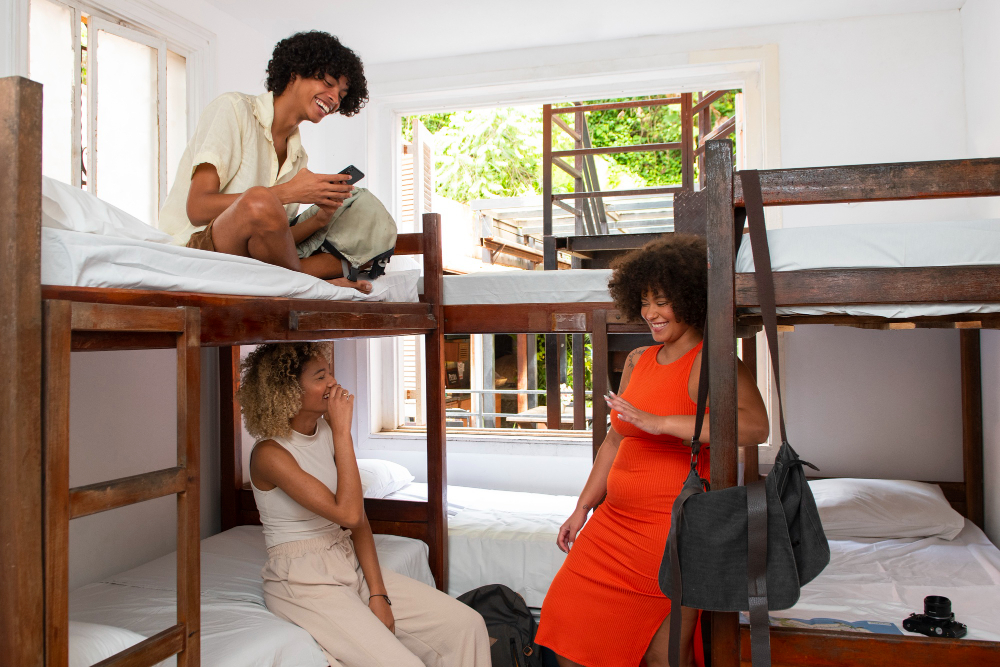
After 15 years of helping newcomers find their first homes here, I’ve seen it all – from folks sleeping on airport benches (please don’t!) to paying way too much for tiny rooms.
Here’s the thing: about 42% of us newcomers end up overpaying for our first place simply because we don’t know better. But don’t worry! Whether you’re landing in the middle of a snowstorm or during our gorgeous summer, I’ve got your back with this complete guide to finding your first temporary home.
Statistics show that 42% of newcomers end up blowing their savings on overpriced temporary housing.
Just last month, I met a family who spent their entire first month’s budget on a mediocre extended stay hotel – simply because they didn’t know better options existed!
Whether you’re touching down in the middle of a January snowstorm or during our gorgeous July weather, finding that first temporary home doesn’t have to drain your savings or stress you out.
Let’s break down everything you need to know about finding safe, affordable temporary housing in Canada.
Your Housing Options (And What Nobody Tells You About Them)
Let me spill the tea about each temporary housing option – the good, the bad, and the stuff that might surprise you!
- Airbnb/VRBO solutions
- Extended stay hotels
- Student residences
- Welcome houses
- Monthly rentals
- Corporate housing
1. Airbnb/VRBO Solutions
I’ve seen the full spectrum here. Last winter, one of my clients scored a fantastic monthly discount by messaging five hosts and negotiating rates. The secret? Look for new listings with few reviews – they’re often more willing to offer deals for longer stays.
Pro tip: Message hosts with this template I’ve refined over years:
“Hello! I’m a professional moving to Canada for work. Looking for a quiet, clean space for [X] weeks while I settle in. I noticed you offer monthly discounts – would you consider [Y price] for a longer stay? I can provide references and employment verification.”
2. Extended Stay Hotels
These can be lifesavers or budget-killers, depending on your timing.
Here’s what nobody tells you: rates typically drop dramatically for stays over 14 days, but you need to call directly rather than book online. I’ve helped newcomers save up to 40% this way.
The sweet spot? Book these during off-peak seasons (October-November or January-March). Just watch out for properties near airports – they’re usually overpriced due to flight crew contracts.
3. Student Residences – The Hidden Gem
This is my favorite summer hack! From May to August, universities scramble to fill empty dorm rooms. You can often snag fully furnished rooms at 50% off regular housing costs. The catch? Book early (February-March) for summer stays.
My best find was helping a family of four score a two-bedroom university apartment for $1,800/month in downtown Toronto last summer. These usually run $3,000+ on the regular market!
4. Welcome Houses
These non-profit gems are the best-kept secret in immigrant housing. They’re usually faith-based or community-run buildings offering below-market rates to newcomers.
The downside? Waiting lists can be long, but I’ve seen spots open up suddenly when other families move out early.
Pro tip: Get on multiple waiting lists the moment you have your visa approved. You can always decline if something better comes up.
5. Monthly Rentals
Here’s where scams love to hide, but also where the best deals lurk.
Yesterday, I helped a newcomer spot a classic scam – gorgeous photos, suspiciously low price, and an overseas landlord requesting a wire transfer.
Remember my golden rule: if you can’t view it in person or via live video chat, walk away!
The legitimate deals? Look for “lease takeovers” or “short-term sublets” on university housing boards. These often come furnished and don’t require long-term commitments.
6. Corporate Housing
Perfect for professionals with employer support, but watch the fine print!
While they’re typically well-furnished and centrally located, hidden fees can add up.
One client nearly fell for a place advertising $2,500/month, only to discover an extra $800 in mandatory cleaning and amenity fees.
Real Talk About Costs (No Sugar-Coating!)
Let’s break down what you’ll actually spend on temporary housing across Canada.
In Toronto, expect to pay $2,800-3,500/month for a furnished one-bedroom short-term rental.
Vancouver’s running about the same, while Montreal offers better deals at $1,800-2,500/month.
But here’s what catches most newcomers off guard – those sneaky extra costs:
Hidden Fee Alert:
- “Administration fees” ($100-300)
- “Cleaning fees” (usually $150-250)
- “Utility setup” ($50-100)
- “Key deposits” ($50-100)
- Internet activation ($50-75)
I learned about utility setups the hard way.
Thought I’d scored a great deal at $2,000/month until I got hit with $300 in setup fees for hydro and gas. Nowadays, I tell all newcomers to budget an extra 15% above the quoted rate for these surprises.
The Deposit Game Most temporary housing requires first month’s rent plus a security deposit.
In Ontario, they can’t legally ask for more than one month’s rent as deposit, but I’ve seen places try. Know your rights!
Your Safety Net: Government & Community Support
Remember when I mentioned those lifesaving programs? Here’s your cheat sheet to getting help:
Settlement Agencies Walk in and ask for housing help – it’s literally their job! They often have partnerships with reliable landlords and can sometimes offer rent supplements.
Emergency Housing Programs:
- First Arrival Emergency Housing (3-7 days free accommodation)
- Newcomer Housing Assistance Program (rent supplements)
- Community Housing Connection (subsidized temporary units)
I had a client last month who arrived with nowhere to stay. One call to the local settlement agency got her three nights in a partner hotel while we found something permanent. These services exist – use them!
Booking Without the Headaches
The Documentation Dance Have these ready before you start booking:
- Passport/Visa
- Proof of funds (bank statements)
- Employment letter/proof of income
- Reference letter (even from your home country)
- Travel insurance
Timing Is Everything Book at least 3-4 weeks ahead during peak seasons (May-September). For winter arrivals, you’ve got more flexibility – I’ve seen same-week bookings work out fine.
Staying Safe & Connected
Neighborhood Safety Check:
- Use the local police website’s crime mapping tool
- Join neighborhood Facebook groups
- Check for good street lighting
- Look for mixed residential/commercial areas
- Notice if people are out walking at night
Essential Services Nearby:
- Public transit (within 10 minutes walk)
- Grocery store
- Walk-in medical clinic
- Bank branch
- Library (free internet!)
Winter Warriors’ Guide: Indoor walkways and subway connections become your best friends. Look for places connected to PATH (Toronto) or RÉSO (Montreal) systems during winter months.
Making the Jump to Permanent Housing
Start your permanent housing search the moment you land. Why? Because building your rental profile takes time.
The Credit Score Workaround:
- Open a Canadian bank account immediately
- Get a secured credit card
- Keep all pay stubs
- Build references through temporary housing
- Consider a larger deposit offer
Neighborhood Research:
- Visit at different times of day
- Check commute times during rush hour
- Look for community centers
- Scout local shopping options
- Notice the demographic mix
Wrapping It Up
Your first temporary home in Canada isn’t just a place to sleep – it’s your launching pad for success. Don’t rush the decision, but don’t overthink it either. Focus on safety, transit access, and staying within budget.
Remember, I’ve seen thousands of newcomers navigate this successfully. Some of my most stressed-out clients are now happily settled in their dream homes, looking back at their temporary housing phase as just part of their immigration journey.
Start with a short-term booking in a safe area. Use that time to learn the city, build your rental profile, and find your perfect permanent home. And most importantly – don’t be afraid to ask for help. We’ve all been there!
Got questions? Drop them in the comments below. I answer every single one because I remember what it’s like to be in your shoes. Welcome to Canada – you’ve got this!
